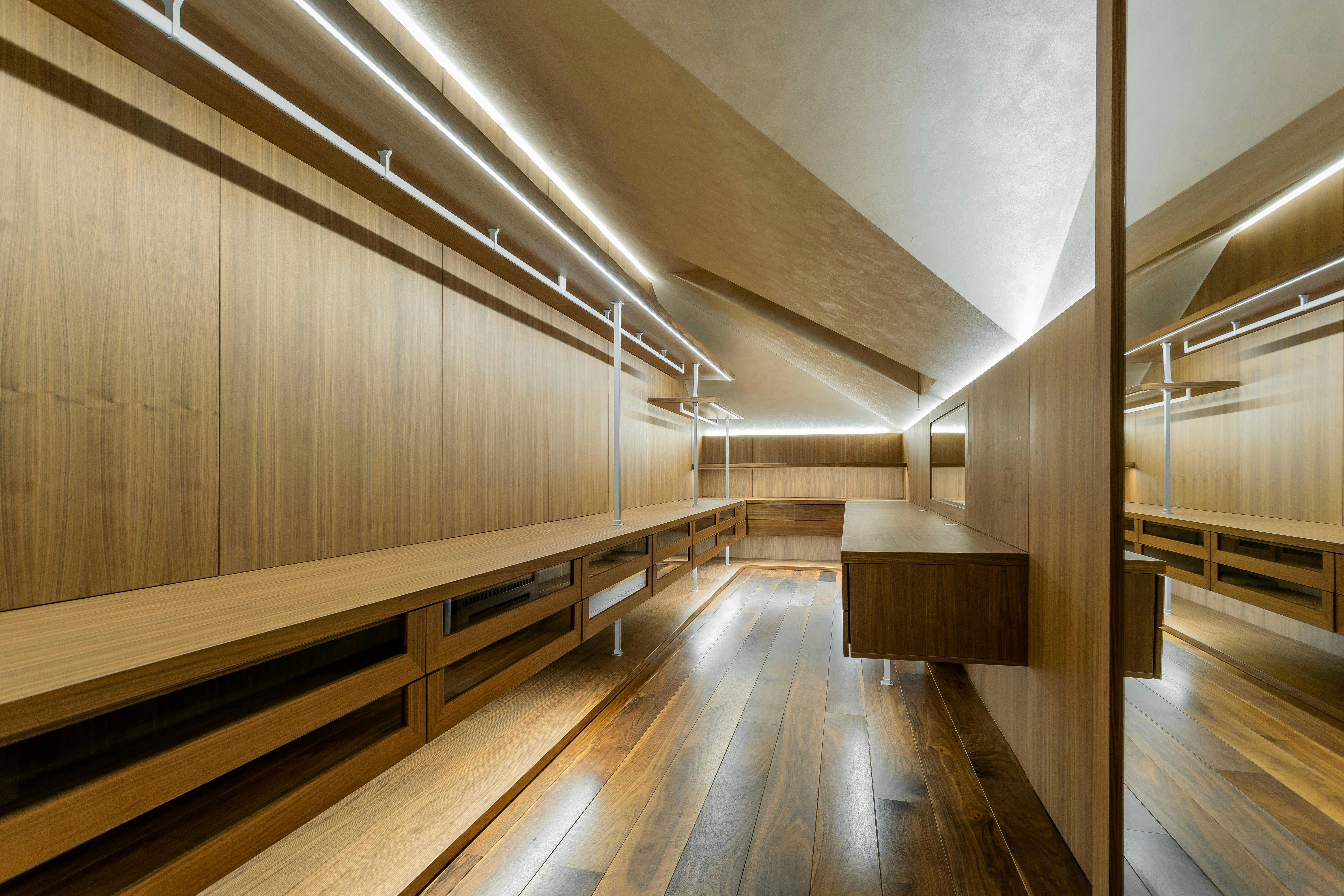
The wardrobe is no longer about storage. In 2026, it is about architecture — a room within a room, designed with the same intention and precision as any other space in the home. The clients who understand this are asking for something fundamentally different.
01 — Materials
Natural Wood Is Replacing Painted Lacquer
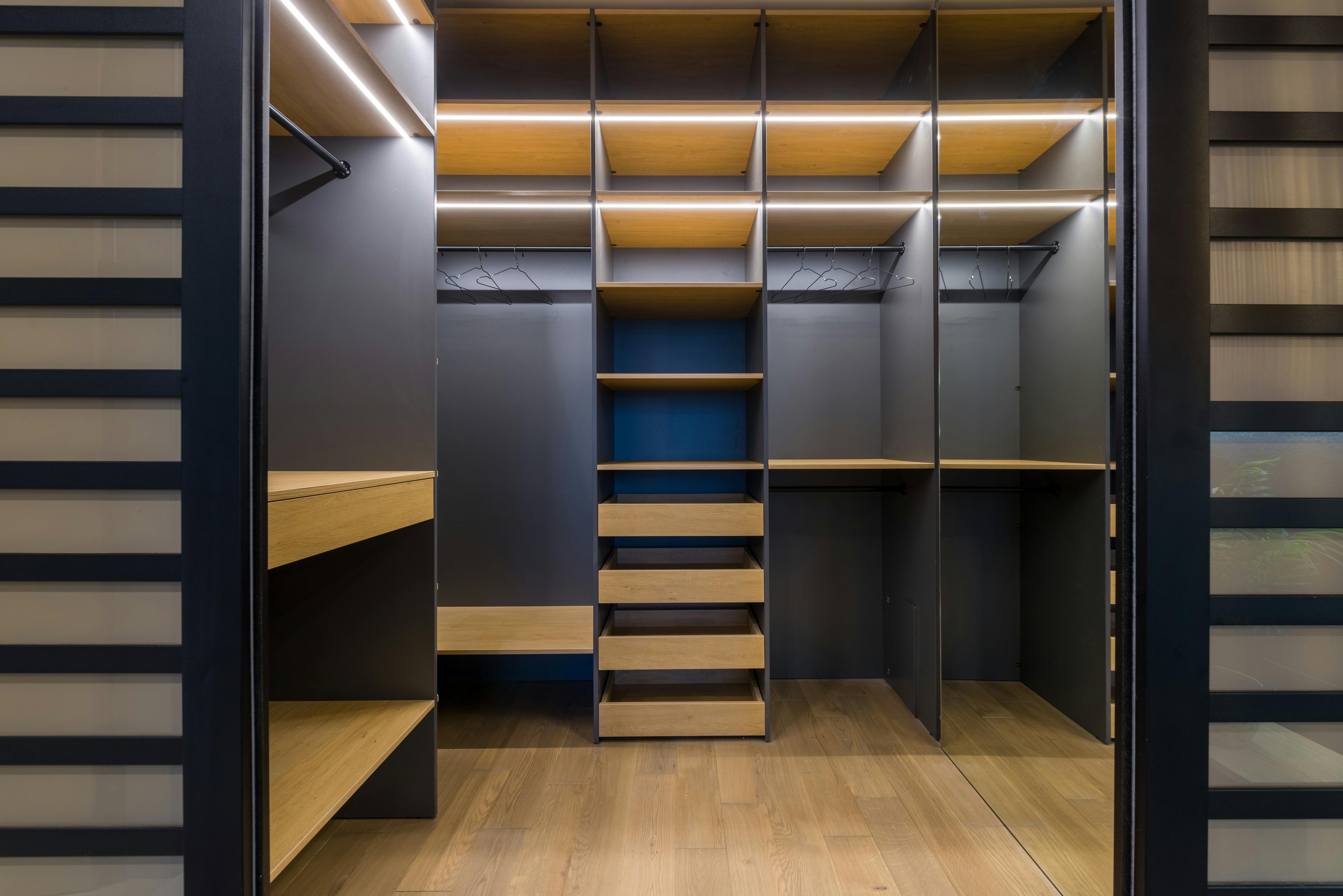
For years, the default interior finish for a custom wardrobe was painted white lacquer — clean, simple, and easy to produce. In 2026, that default is being challenged. Natural oak veneer, smoked walnut, and lightly brushed timber are replacing lacquer in high-end walk-in wardrobes, bringing warmth and tactility to spaces that were previously cold by design.
The shift is not purely aesthetic. A wardrobe in natural timber communicates craft in a way that painted MDF simply cannot — the grain, the variation, the weight of the material all read as intentional.
"When you open a wardrobe and the first thing you notice is the grain of the wood — that is quality you cannot fake."
Solid wood drawer boxes, dovetail joints, and full-extension undermount runners are now the standard at this level, not the exception.
02 — Organisation
Zones, Not Just Space
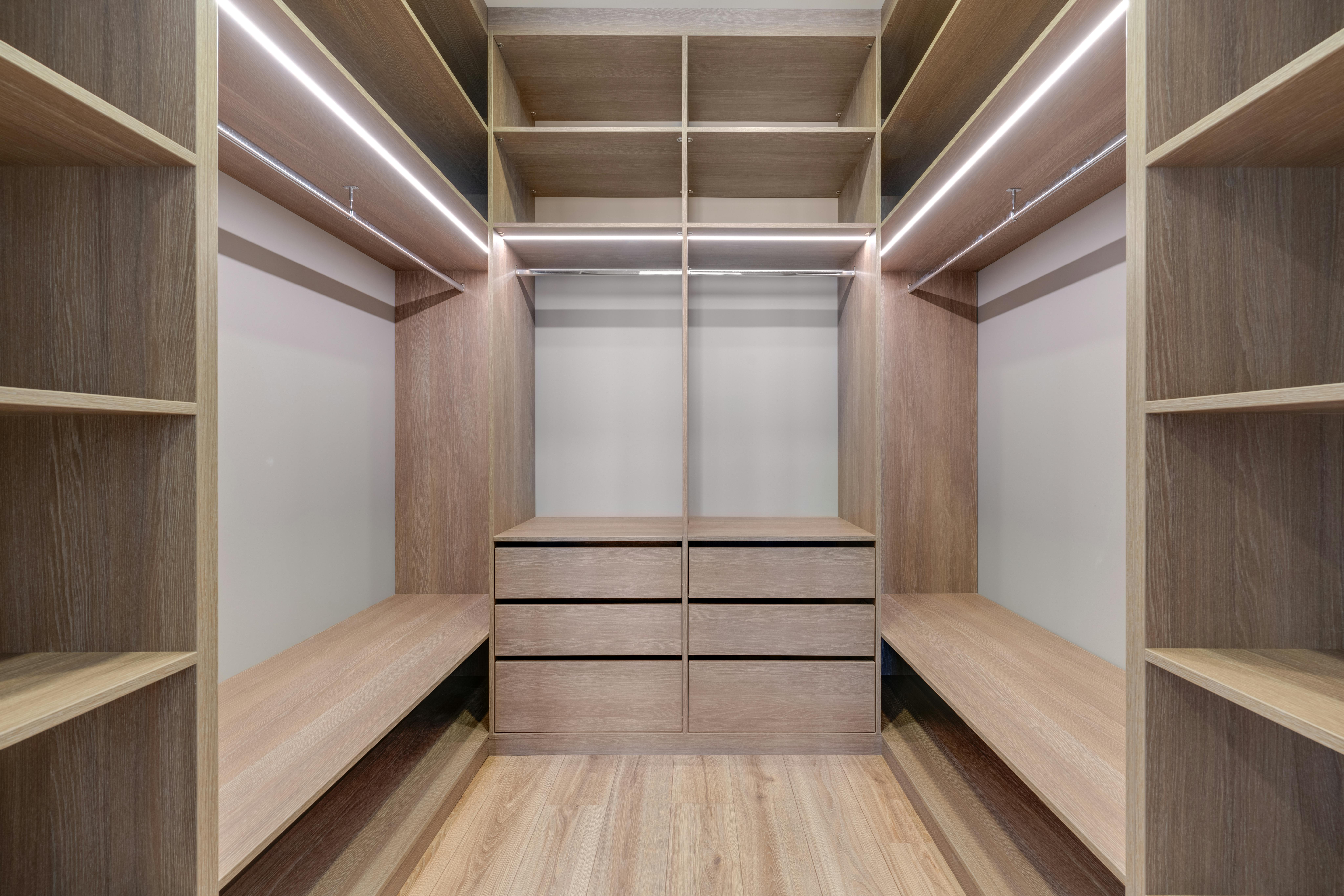
The era of the generic hanging rail is over. In 2026, the best walk-in wardrobes are designed around the specific wardrobe of the person using them — not a generic allocation of hanging, shelving, and drawers applied to whatever space is available. Each zone is sized, positioned, and finished for its intended purpose.
Double hanging is giving way to a more intentional mix: full-length hanging for gowns and coats, short double-hang for shirts and jackets, open shelving for folded knitwear, and deep pull-out drawers for everything that does not belong on a hanger. The result looks effortless because it has been precisely planned — nothing is approximate, nothing is wasted.
The island unit — a central freestanding or built-in cabinet with drawers on all sides — is now standard in any walk-in of meaningful size. It provides surface space, additional storage for accessories and jewellery, and anchors the room architecturally. In the best examples, the island is finished differently from the perimeter — a two-tone approach that gives the wardrobe visual depth and an unmistakably bespoke quality.
03 — Lighting
Lighting Is the Detail Most Often Missed
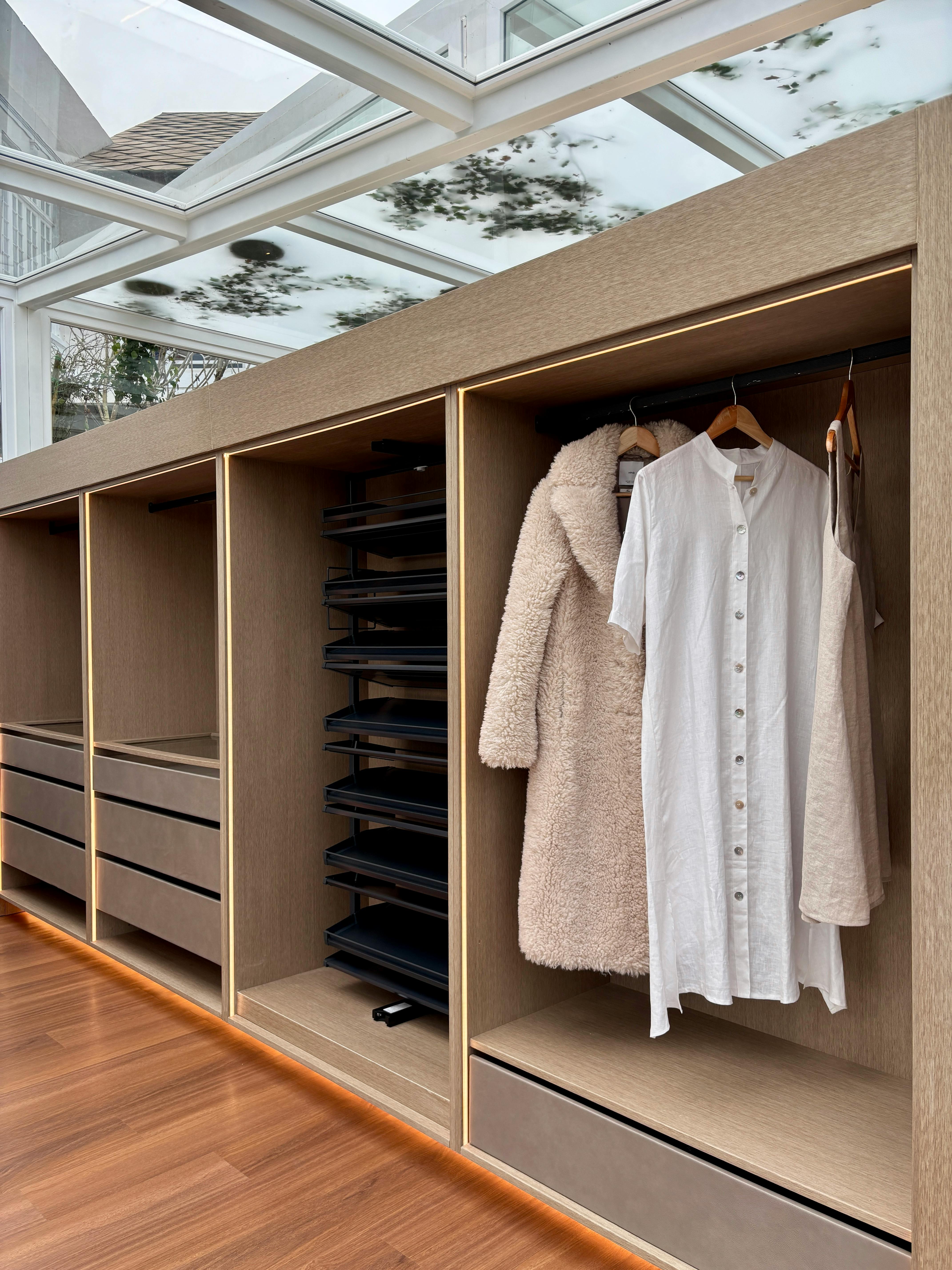
A wardrobe that is poorly lit will never look right — regardless of how well the millwork is executed. In 2026, integrated lighting is not an add-on. It is part of the design from day one: LED strips recessed under shelves, inside drawers, and along the perimeter ceiling.
Colour temperature matters more in a wardrobe than almost anywhere else in the home. The target is 3000K: warm enough to feel considered, accurate enough to be useful.
"The wardrobe that photographs beautifully is almost always the one where the lighting was planned from the beginning."
Backlit mirrors — frameless and full-height with embedded LED perimeters — transform the feel of the space entirely, making a walk-in read as a room rather than a storage unit.
04 — Finish & Colour
Greige Is the New White
Stark white painted interiors are giving way to warm greige tones — a blend of grey and beige that reads as sophisticated without demanding attention. The shift mirrors what is happening in kitchens: clients want warmth, not sterility, and greige delivers that in a way that ages better than pure white and photographs better than grey.
Accent back panels are emerging as one of the most effective ways to add depth to a wardrobe interior without committing to a statement finish throughout. A fluted back panel in a contrasting tone behind the hanging section, or a fabric-wrapped panel behind an open shelving bay, adds texture and visual interest in the right proportion — enough to elevate, not enough to overwhelm.
Hardware is following the same direction as kitchens: unlacquered brass and antique nickel are displacing brushed gold and chrome. Recessed finger pulls — a subtle routed groove rather than a protruding handle — are increasingly common in wardrobe doors, giving the elevation a clean, frameless quality without sacrificing function.
05 — Style
The Dressing Room Standard
The aspiration in 2026 is not a large wardrobe. It is a dressing room — a space that functions with the quiet precision of a high-end boutique and feels as considered as any other room in the home. The difference between a wardrobe and a dressing room is not primarily about size. It is about intention: a chair or bench to sit on, a surface to set things down, a full-length mirror positioned correctly, lighting that is warm and accurate.
Quiet luxury — the same aesthetic direction driving kitchen and interior design across the premium market — applies here in its most complete form. Nothing is decorative for its own sake. Every element has a purpose, and the purpose is executed with precision. The seating is placed where it is useful. The mirror is sized for the space. The hardware is chosen for longevity, not trend.
"The best wardrobe we ever built was one the client described as feeling like a shop that only stocks things they love. That is the standard."
The clients commissioning wardrobes at this level in 2026 are not asking for the most features or the most storage. They are asking for a space that works exactly the way they live — and looks, on first opening, like it was always meant to be there. That is a millwork problem. It requires craft, planning, and execution that no flat-pack system will ever deliver.
PrimeCraft Collective
Commission Your Wardrobe
Every wardrobe we build is designed around the space and the person — fully custom, fully managed, delivered to a standard that holds.
Request a Private Consultation →