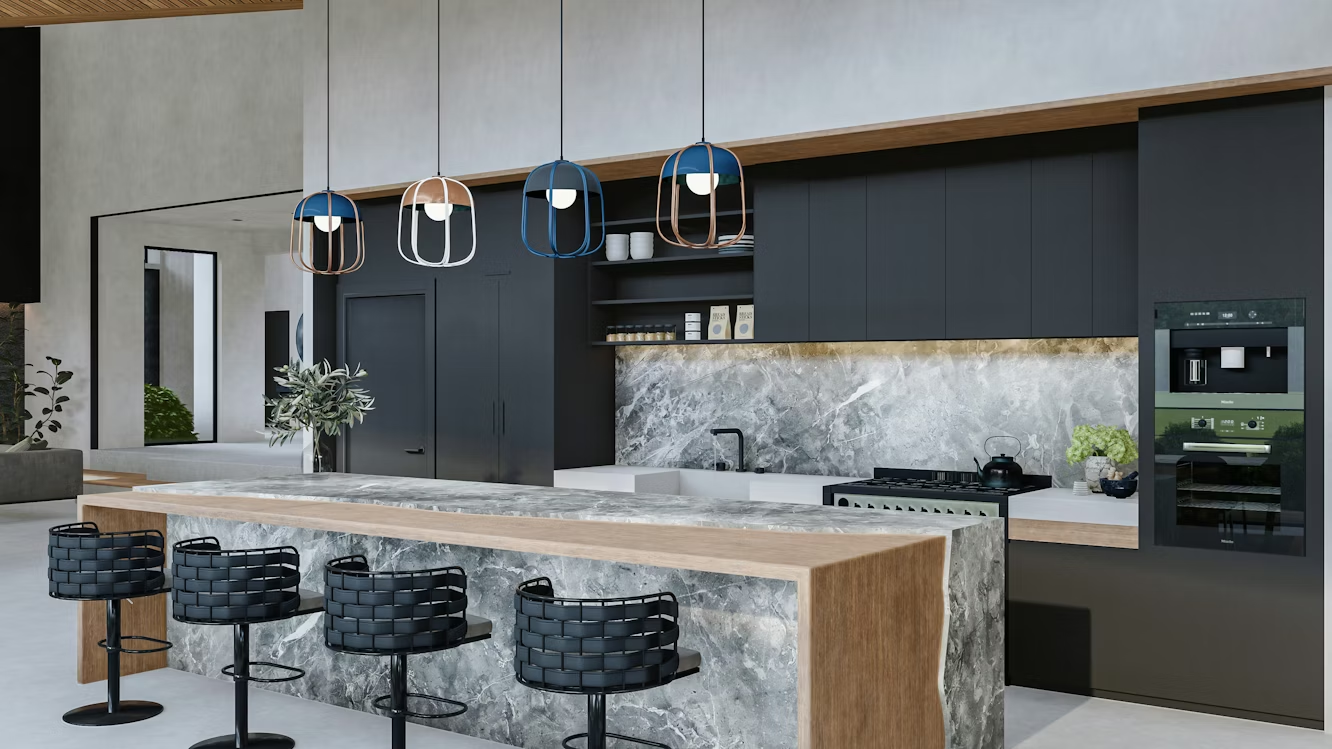
The kitchen is no longer just a functional space. In 2026, it is the centrepiece of the home — and the clients who invest in it are asking for something different. Not louder. Quieter. Not more features. More precision.
01 — Materials
Texture Is Taking Over
Flat slab doors had their moment. In 2026, the move is fluted and reeded cabinet fronts — vertical grooves machined or routed into the door face that add depth and shadow without adding visual noise. The effect is architectural rather than decorative, and it photographs exceptionally well in natural light.
Alongside fluting, limewash and plaster wall finishes are replacing traditional tile backsplashes in high-end kitchens. The result is a surface that looks intentional, aged, and completely bespoke — something no mass-market product can replicate.
"The clients who are spending serious money are not asking for more. They are asking for better — and texture is how you feel quality before you touch it."
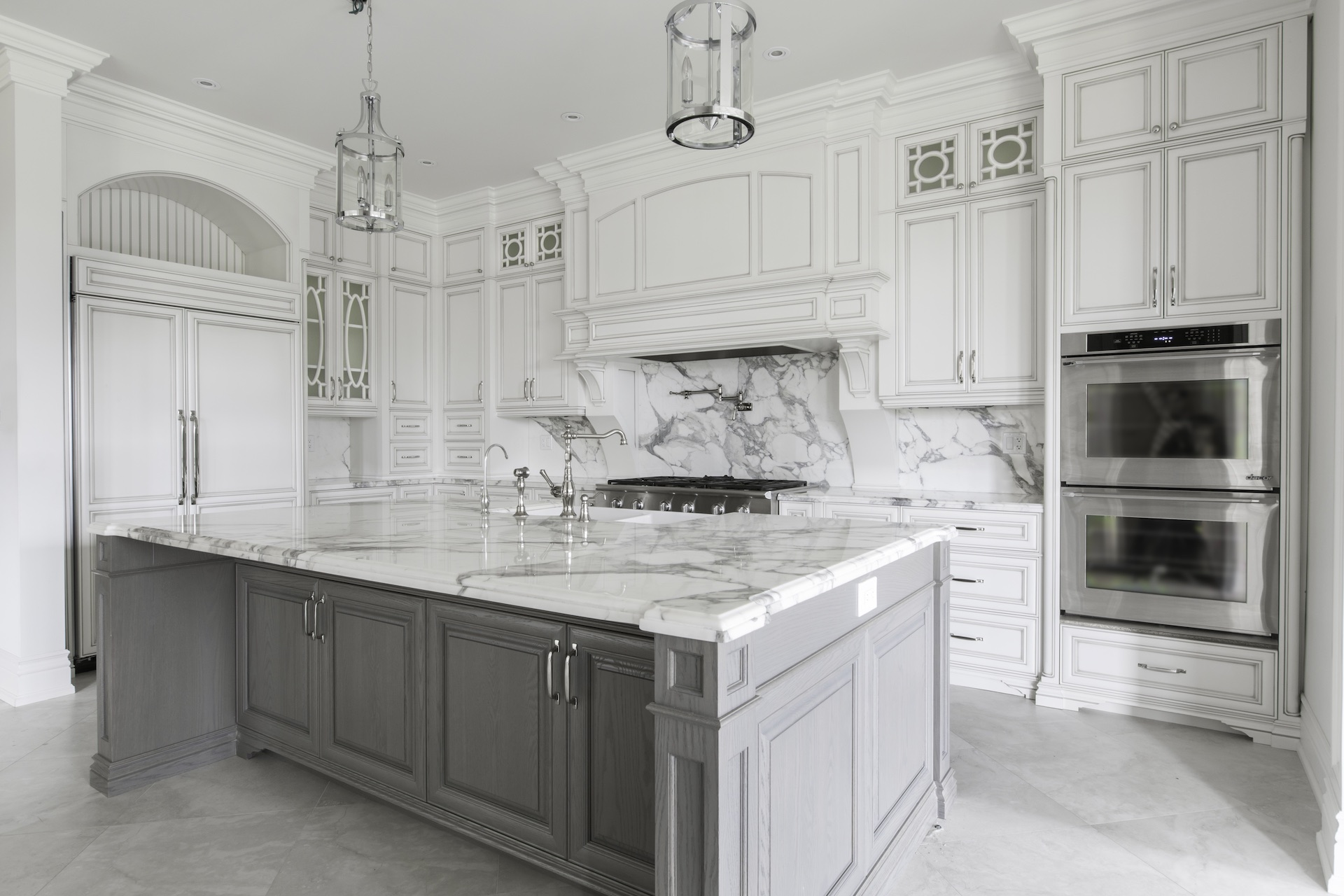
Sintered stone surfaces — Dekton, Neolith, and similar — are also overtaking marble as the countertop of choice for clients who want the visual without the maintenance. Thicker profiles (60mm and above) on islands are now standard at the premium level.
02 — Colour
The White Kitchen Is Not Dead — It Has Evolved
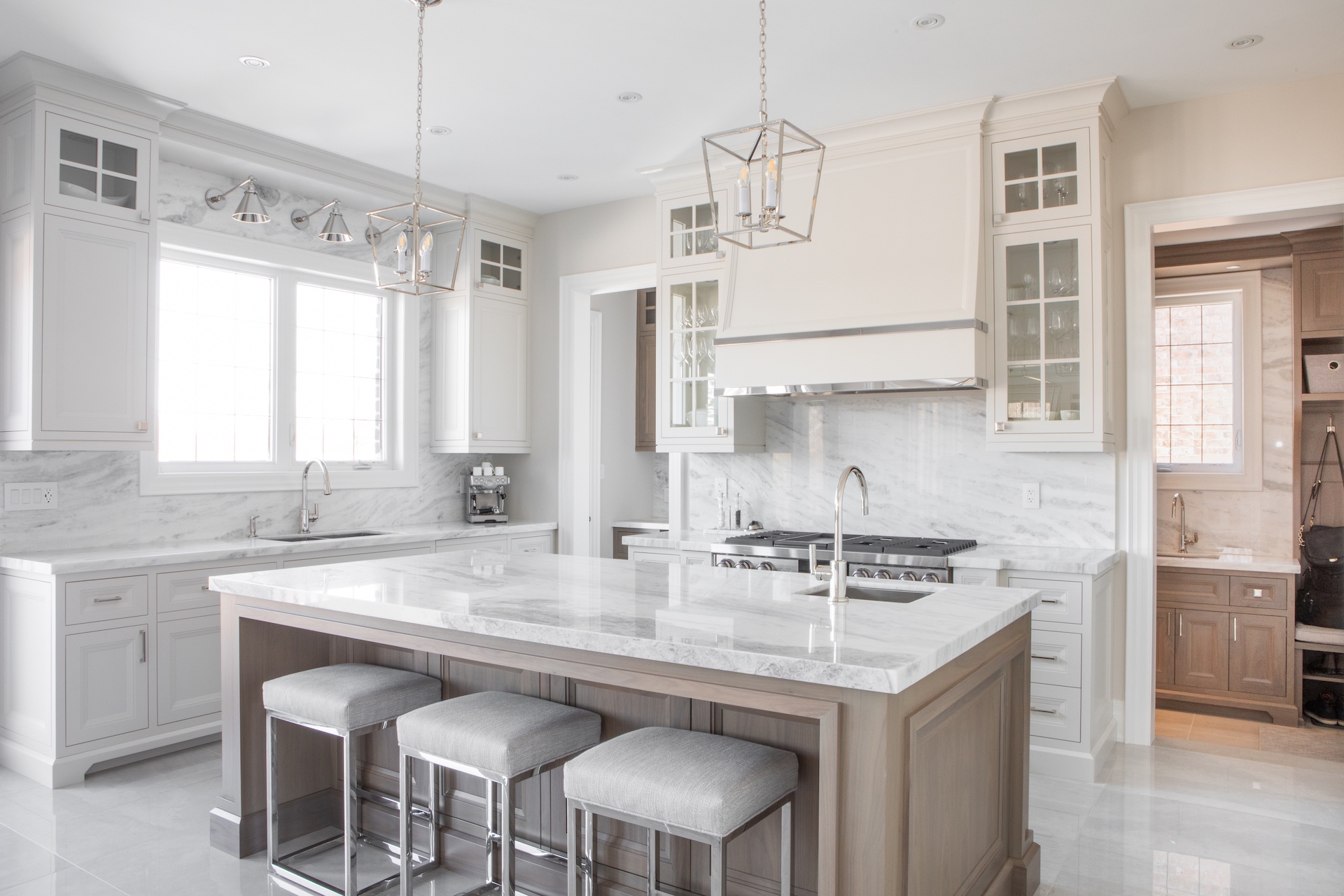
Stark white is out. Warm off-whites, aged creams, and limewash whites are in. The shift is subtle but significant — it is the difference between a kitchen that feels clinical and one that feels considered.
Deep hunter green, forest tones, and moody charcoal are the statement colours of 2026 — almost always used on the island or lower cabinets, with warm neutrals above. The contrast reads as intentional and confident rather than trendy.
Terracotta is appearing as an accent — not on cabinets, but in hardware, textiles, and tile borders. Used sparingly, it adds warmth without committing to a look that dates quickly.
03 — Hardware
Unlacquered Brass Is the New Black
Brushed gold had a long run. In 2026, the move is unlacquered brass — a living finish that patinas over time, developing character rather than looking outdated. It is the anti-trend trend: a material that improves with age in a market obsessed with newness.
Paired with warm whites or deep greens, unlacquered brass reads as authentically high-end. It is not cheap to source and not easy to install well — which is precisely why it signals quality to anyone who knows what to look for.
04 — Layout
Integration Is Non-Negotiable
Visible appliances are a tell. In 2026, everything is integrated — refrigerators, dishwashers, ovens, and microwaves are all panel-ready and flush with the cabinetry. The kitchen reads as a single, continuous piece of millwork rather than a collection of appliances surrounded by cabinets.
The butler's pantry — or scullery — is becoming standard in high-end new builds and major renovations. The idea is simple: the main kitchen stays clean and curated at all times, while the real work happens behind closed doors. It is as much a lifestyle statement as a functional one.
Open shelving is not going away, but it is being deployed with more restraint. Two or three open shelves within an otherwise fully closed kitchen — used for intentional display, not storage — is the move. Everything visible is chosen. Nothing is accidental.
05 — Style
Quiet Luxury Is the Dominant Direction
No logos. No flash. No statement pieces that date within two years. The clients driving the premium end of the market in 2026 want kitchens that look expensive without announcing it — spaces where the quality is evident in the details, not the drama.
Japandi — the intersection of Japanese minimalism and Scandinavian warmth — continues to influence kitchen design at the high end. The result is spaces that are spare without being cold, and precise without being sterile. Natural materials, restrained colour, and exceptional craftsmanship are its pillars.
"The best kitchens in 2026 do not try to impress. They simply are — and the quality speaks without effort."
Curved cabinetry and arched details are appearing more frequently — a soft counterpoint to the hard lines that dominated the last decade. Used selectively, a curved island end panel or arched upper cabinet reads as handcrafted and considered. Used excessively, it becomes a trend. The difference is restraint.
PrimeCraft Collective
Build Something That Lasts
Every kitchen we deliver is designed to outlast the trends — built to a standard that holds up in five years, not just five months.
Request a Private Consultation →