A built-in is not furniture. It cannot be moved, replaced, or swapped out on a whim. Done right, it becomes part of the architecture — and that permanence is exactly what makes it one of the highest-return investments you can make in a home.
01 — Libraries & Shelving
Floor-to-Ceiling Is the Only Way to Do It
A floating shelf is decoration. A floor-to-ceiling library is architecture. The difference is not just visual — it is structural. A properly designed built-in shelving unit is fitted to the room, anchored to the wall, and finished to match the trim and moulding. It reads as part of the house, not something placed inside it.
For home libraries, the details that matter most are adjustable shelf spacing, integrated lighting, and a ladder rail if the run is long enough to warrant it. These are not luxury add-ons — they are what separates a built-in that functions beautifully from one that just looks good in photos.
"A built-in library does not just store books. It transforms a room into a destination — and adds square footage value that no freestanding shelf ever could."
In the GTA market, a well-executed library or study built-in consistently returns more than its cost at resale — particularly in homes where the buyer demographic values craftsmanship over square footage.
02 — Entertainment Units
The TV Wall, Done Properly
A flat screen mounted on a painted drywall is a missed opportunity. A built-in entertainment unit — with integrated cabinetry for media equipment, display shelving on either side, and a recessed panel behind the screen — turns the same wall into a considered design statement.
The best entertainment units are designed around the specific room: ceiling height, wall width, existing mouldings, and the viewing distance from the seating. Cable management, equipment ventilation, and acoustic panel integration are all handled at the millwork stage — not as afterthoughts.
Two-tone finishes — a darker base with lighter upper shelving, or vice versa — are the move in 2026. It breaks up the mass of a large wall unit and gives the eye somewhere to rest without breaking the visual flow.
Custom built-in millwork — PrimeCraft Collective, GTA
03 — Wine Rooms & Cellars
The Highest-Ticket Built-In in the Market
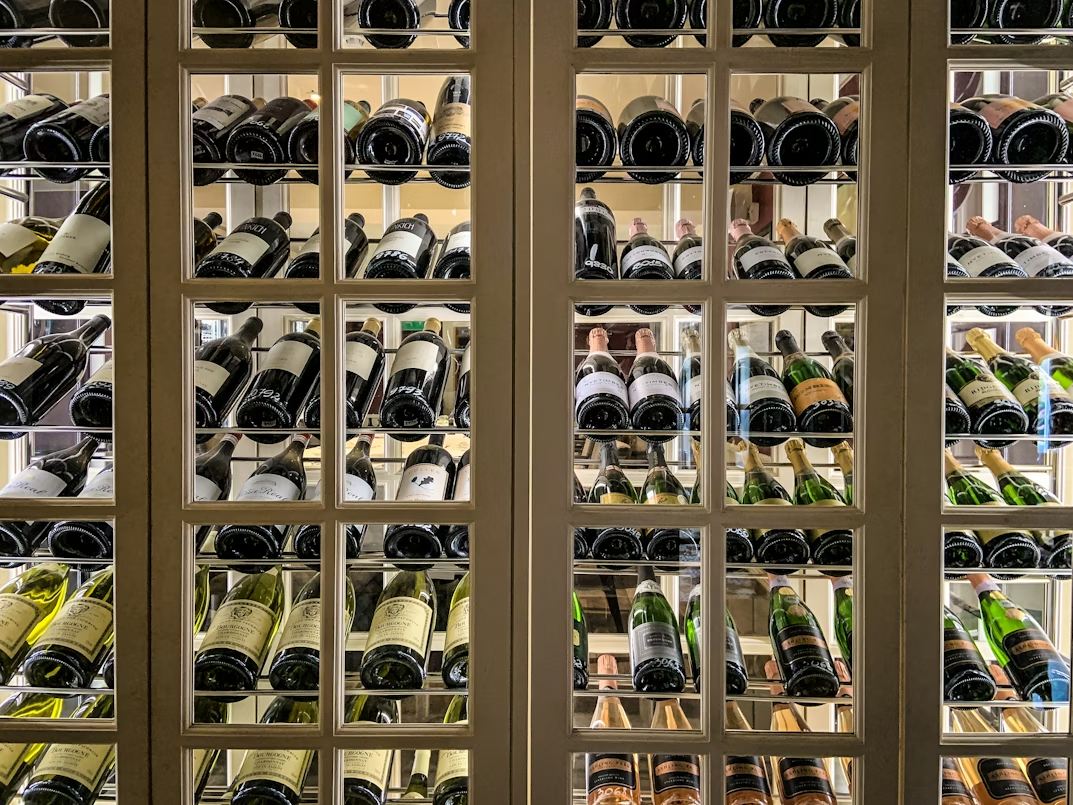
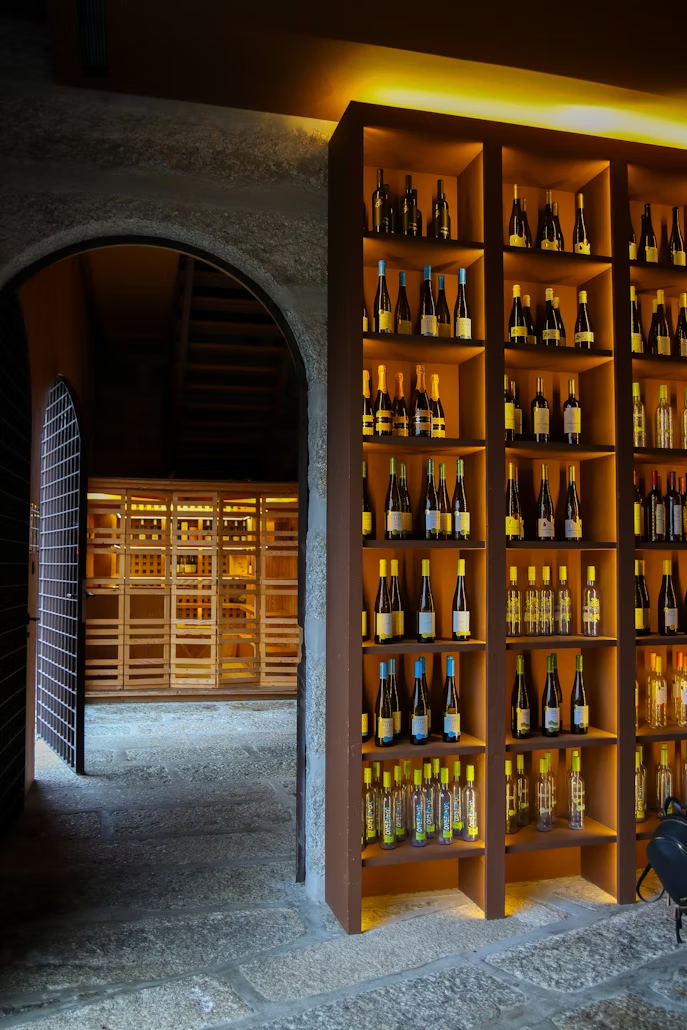
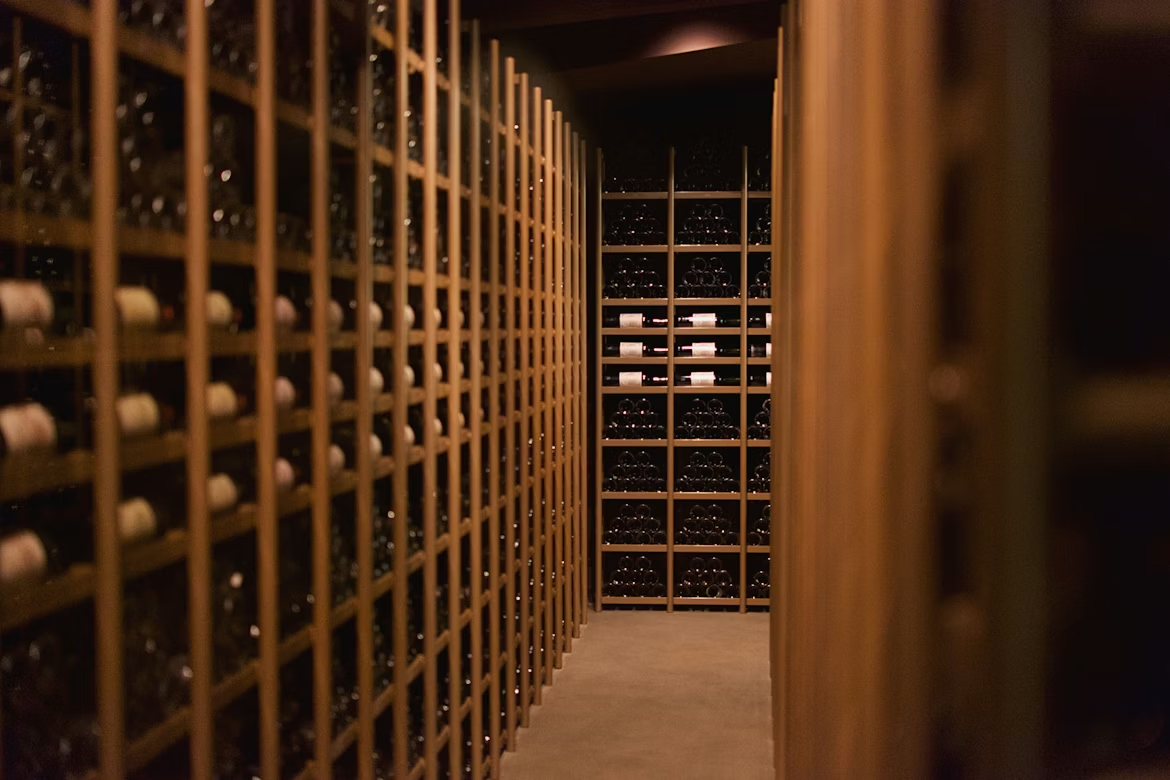
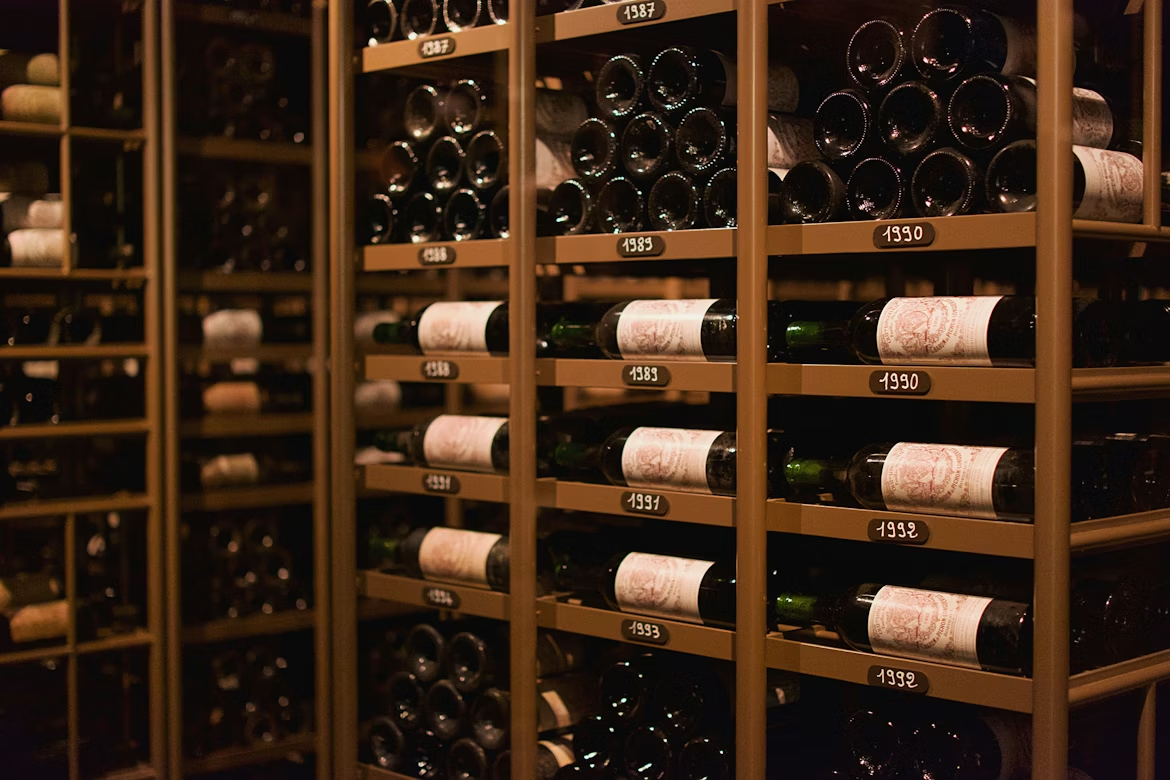
A custom wine room is the built-in that signals, more than any other, that a home was designed with intention. Floor-to-ceiling rack systems, climate control integration, display sections for feature bottles, and glass wall panels — each element is a decision, and each decision requires a designer who understands both the craft and the client.
The millwork principles are identical to kitchen cabinetry — precise measurements, moisture-resistant substrates, and a finish specified for the environment. What changes is the purpose: a wine room is as much a lifestyle statement as it is a storage solution. Clients who invest in one are not just storing wine. They are building a room they want to show people.
"A wine room is not a renovation. It is a feature — the kind that defines how a home is remembered."
At PrimeCraft Collective, wine rooms are handled the same way as every other commission: designed by a human, built to the architecture, and delivered to a standard that holds up in ten years.
04 — Home Offices
Built to the Room, Not Around It
A desk purchased from a retailer fits a room the way a suit off the rack fits a body — approximately, but not exactly. A built-in home office is different. The desk depth, the overhead storage height, the drawer configuration, the cable routing — everything is designed for the specific person using it in the specific room it occupies.
In 2026, home office built-ins are increasingly being specified with integrated monitor arms, hidden charging, and acoustic panel inserts — features that require the millwork and the technology to be designed together, not fitted together after the fact.
The result is a workspace that looks like it was always there — because, in the most important sense, it was. Built to the architecture. Part of the house.
05 — What Makes a Built-In Worth the Investment
Permanence Is the Point
The clients who invest in built-ins understand something that the clients who buy furniture do not: permanence has value. A built-in cannot be taken out of the home without leaving a trace. That is not a limitation — it is the entire point. It signals commitment to the space. It signals quality. And in the resale market, it signals to the next buyer that this home was cared for at a level above the ordinary.
The return on a well-executed built-in is not just financial. It is experiential — the daily satisfaction of a space that works exactly as it should, looks exactly as it was intended, and holds up without compromise year after year.
"The best built-ins disappear into the architecture. You stop noticing them as objects and start experiencing them as space."
At PrimeCraft Collective, every built-in we deliver starts with the same question: what does this room need to become? The answer determines everything — the layout, the material, the finish, and the details that make the difference between a built-in that looks good and one that lasts.
PrimeCraft Collective
Ready to Add Something Permanent?
Every built-in we deliver is designed for the room it lives in — and built to a standard that holds up for the life of the home.
Request a Private Consultation →