More bathroom renovations disappoint than any other room in the home. The tile is right, the fixtures are right, the lighting is considered — and yet something is off. In almost every case, the problem is the millwork. The vanity is too shallow, the storage is an afterthought, and the cabinetry finishes in a way that undermines everything else in the room.
01 — The Core Problem
Bathrooms Are Treated as an Afterthought — Until They're Not
The kitchen gets the budget, the wardrobe gets the attention, and the bathroom gets what is left. This is how most renovations are planned — and it is why most bathrooms, even expensive ones, fall short. The millwork in a bathroom carries as much visual weight as any other room, but it is routinely under-specified, under-budgeted, and under-executed.
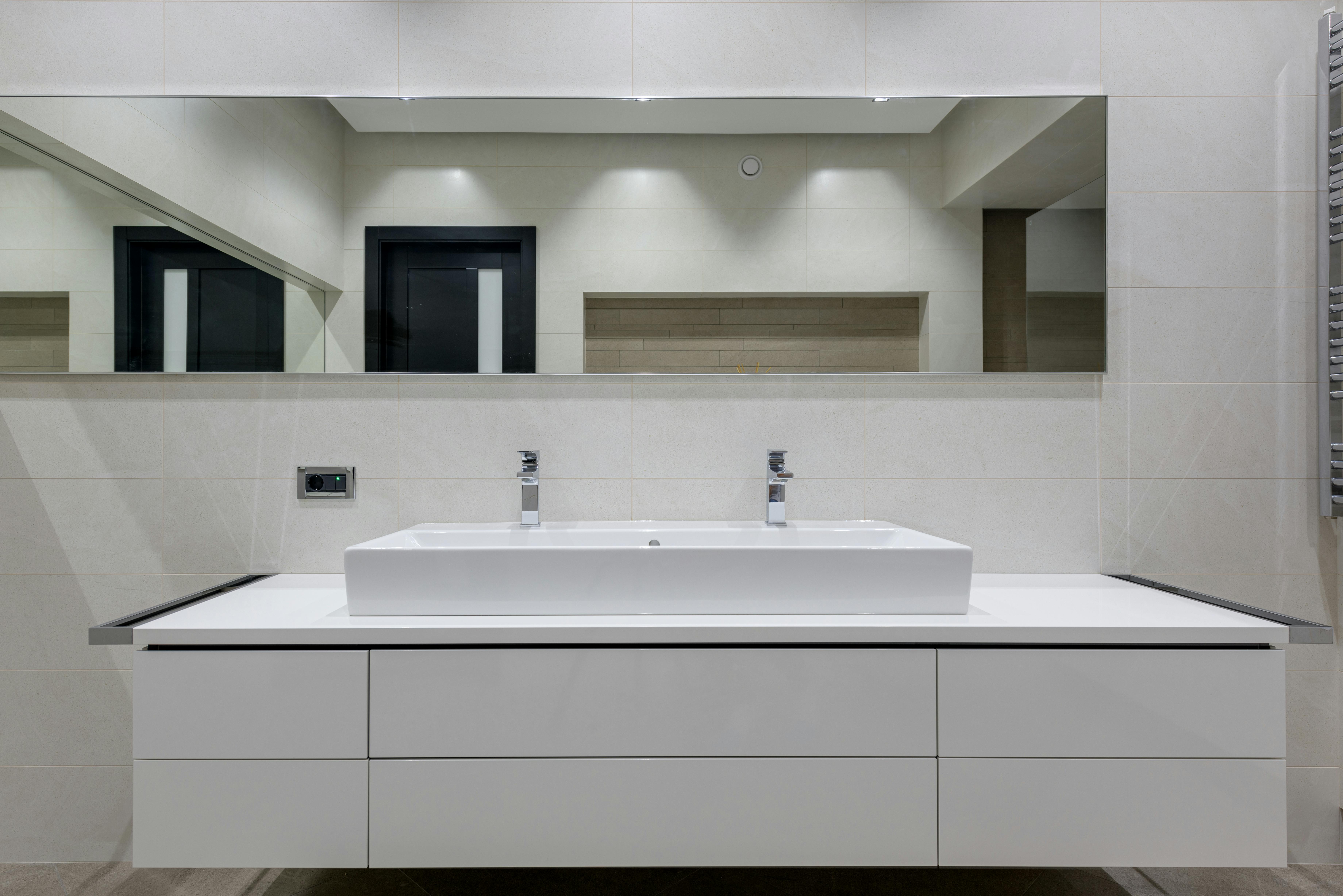
The vanity is the centrepiece of most bathrooms. It is the first thing you see when you walk in, the surface you use every single morning, and the piece of furniture that sets the tone for everything else in the room. A vanity selected from a big-box supplier and dropped into a premium bathroom renovation is immediately obvious — not because it looks bad in isolation, but because it does not belong. The proportions are wrong, the depth is standard when the space demands custom, and the finish reads as generic next to bespoke tile and high-end fixtures.
"We have never seen a bathroom where the tile was the problem. The problem is almost always the vanity — either the wrong size, the wrong finish, or both."
02 — Vanities
The Floating Vanity Is Not Always the Answer
The floating vanity has dominated bathroom design for the better part of a decade. But in 2026, the floor-mounted vanity — in solid timber or a furniture-style finish — is returning to premium bathrooms as a deliberate counterpoint to the sterile floating look that has become ubiquitous.
The choice should be driven by the architecture of the room, not by trend. A narrow ensuite benefits from floating. A generous primary bathroom with high ceilings often looks better with a grounded, furniture-weight piece that commands the space.
Depth is the detail most often compromised. Standard vanities sit at 450–500mm. In a custom build, 550–600mm is far more functional — that 100mm difference costs relatively little and makes a disproportionate difference to how the bathroom reads every day.
03 — Materials
Not Everything Survives a Wet Environment
Bathroom millwork fails for one reason more than any other: the wrong materials used in the wrong conditions. MDF — the standard substrate for painted kitchen cabinetry — has no place in a bathroom that sees daily steam and humidity. It swells, delaminates, and fails at the base within a few years. The specification for bathroom cabinetry must start with moisture-resistant board at minimum, and marine-grade or solid timber where the exposure is highest.
Painted finishes in bathrooms require a two-pack polyurethane lacquer rather than standard water-based paint — the hardness and moisture resistance of the finish determines how the surface holds up over time. A bathroom vanity that looks perfect at installation and shows wear within two years is a materials failure, not a design one.
"The specification for bathroom millwork is not the same as kitchen millwork. The environment is different, the failure modes are different, and the materials need to match that reality."
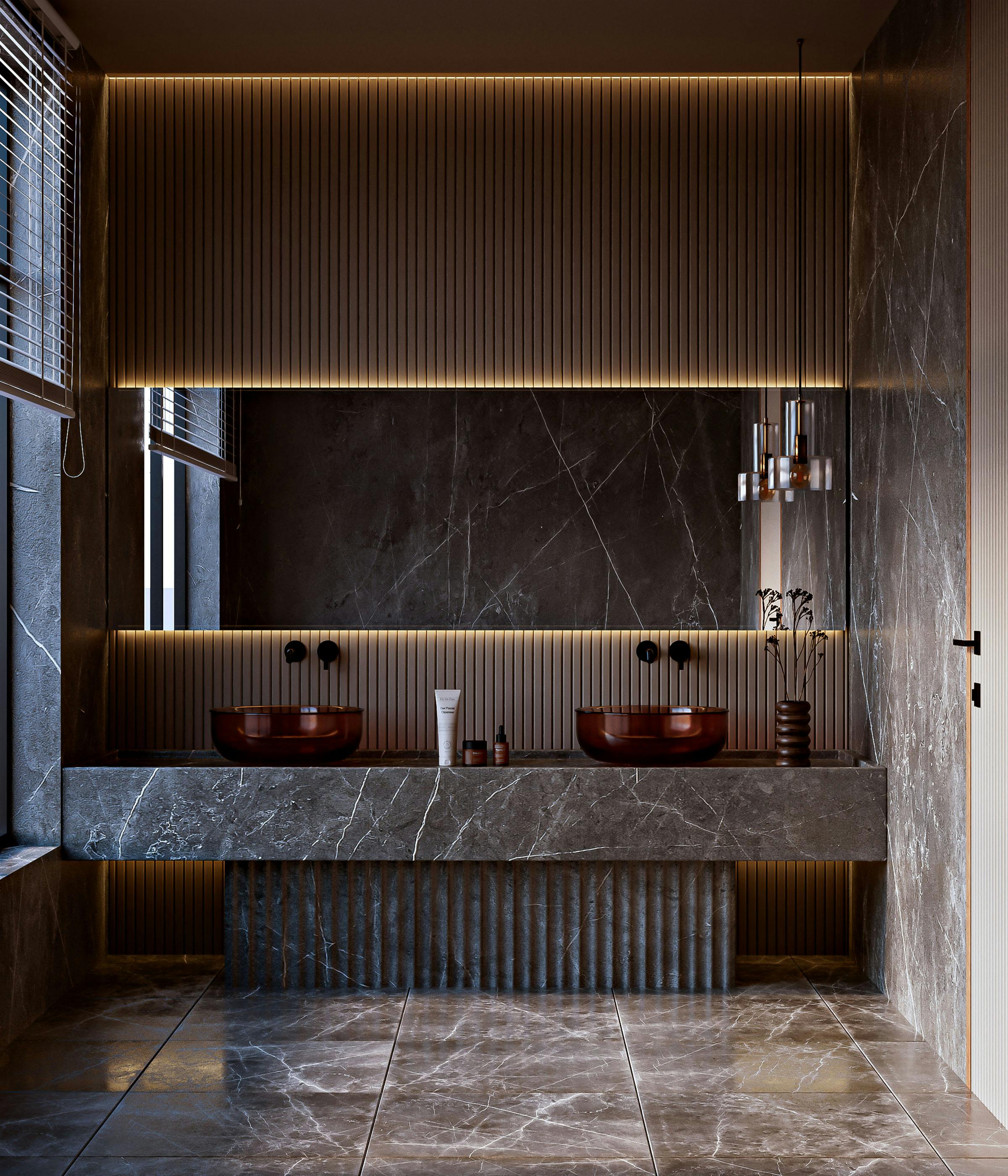
Natural stone and sintered surfaces for vanity tops are now standard at the premium level — not because marble is the only option, but because the client paying for a high-end bathroom is not interested in a laminate top that mimics stone. The real thing is not significantly more expensive at this scale, and it performs and ages in a way that nothing else replicates. A thick-profile stone top — 30mm or 40mm — anchors the vanity visually and communicates quality without a word.
04 — Storage
Built-In Storage Is What Separates Good Bathrooms from Great Ones
The mirror cabinet — recessed flush into the wall with the mirror sitting within a minimal frame — provides substantial concealed storage while keeping the visual completely clean. The result reads as architectural rather than utilitarian.
Recessed niches in shower walls — properly waterproofed and tiled — eliminate the corner caddies and freestanding organizers that compromise an otherwise considered bathroom. A niche is a millwork decision before it is a tile decision.
Under-vanity storage is frequently underspecified. Pull-out drawer systems, internal shelving, and soft-close doors make the difference between a vanity that works and one that creates daily frustration. The clients who have lived with a well-organised vanity never go back.
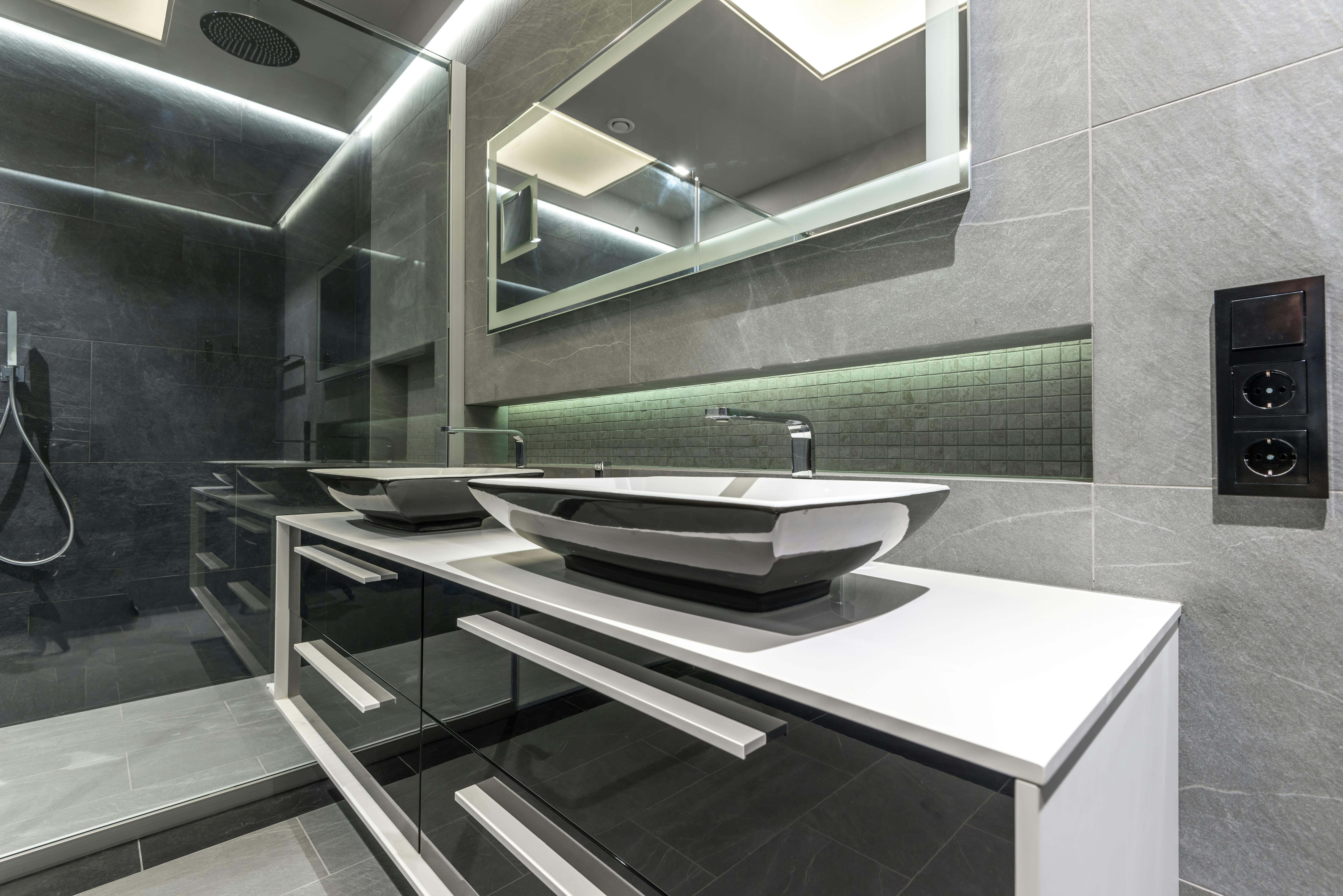
Custom double vanity — full-depth, integrated basin recess, GTA
05 — The Details
Hardware and Lighting Are Not Optional
Bathroom hardware — handles, towel rails, toilet roll holders, robe hooks — is the detail most often value-engineered out of a bathroom renovation and most often regretted. When the millwork is premium and the fixtures are premium, standard hardware reads immediately as a cost-saving measure. The finish has to carry through: if the tapware is brushed nickel, the vanity hardware is brushed nickel, the towel rail is brushed nickel. Mixing finishes in a bathroom is rarely intentional and almost always looks like it wasn't planned.
Vanity lighting is the most functional lighting decision in the home. Side-mounted sconces at face height — rather than a single downlight above the mirror — eliminate the unflattering shadows that make overhead bathroom lighting universally disliked. The position, height, and colour temperature of vanity lighting should be specified as precisely as any other part of the room. 2700K is the target: warm, accurate, and flattering without being orange.
Heated towel rails integrated flush into a full-height tower cabinet — rather than freestanding on a wall — are the detail that clients mention years after the project is complete. Practical, invisible when not in use, and a small indication of the level of thought that went into the space. It is the kind of detail that separates a bathroom that was designed from one that was assembled.
PrimeCraft Collective
Get the Bathroom Right
We specify, supply, and install bathroom millwork to the same standard as our kitchens — because the bathroom deserves the same attention.
Request a Private Consultation →